

Blog
New Mushroom Farming Training Batch Now Open

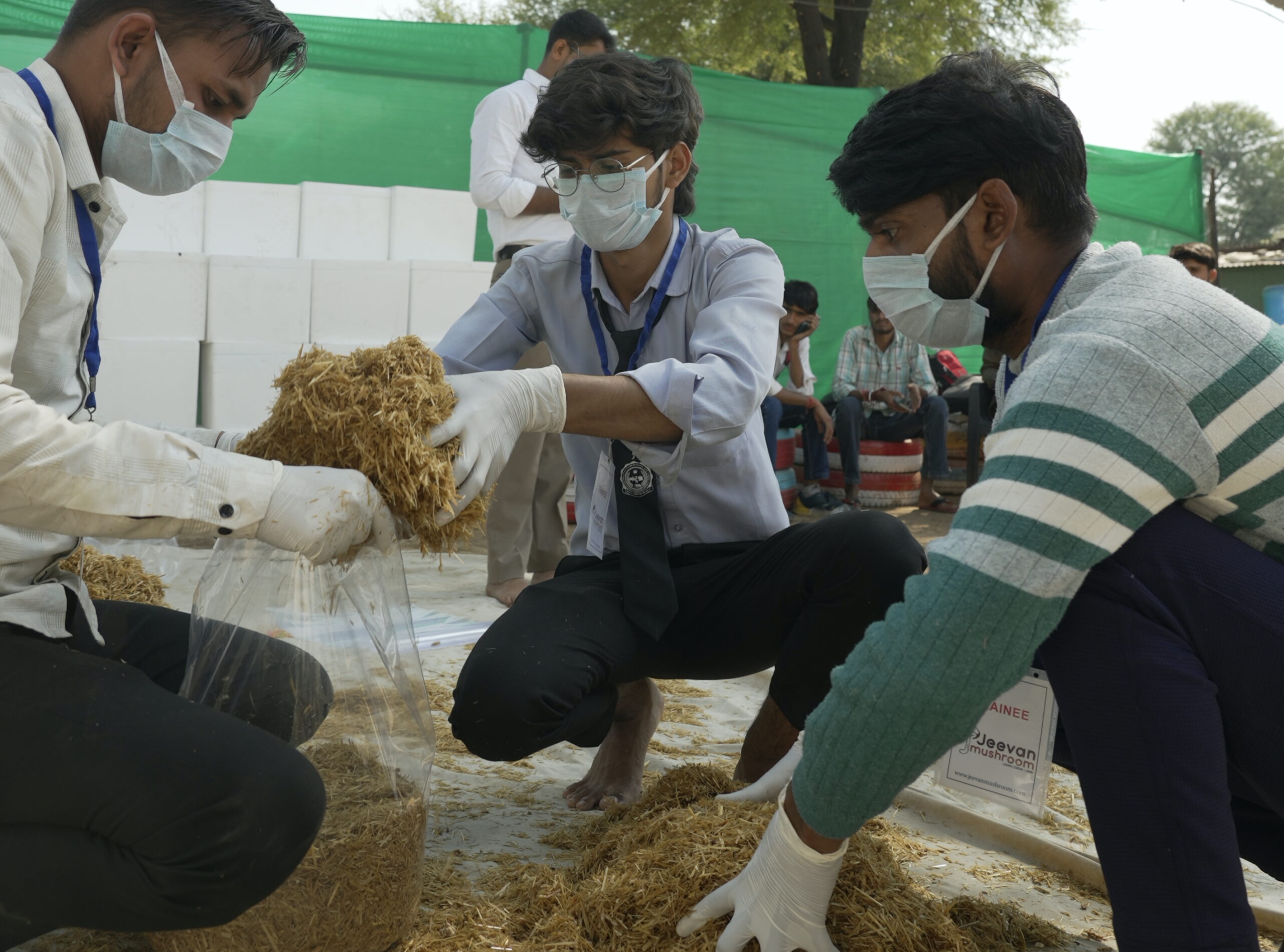
Jeevan Mushroom is pleased to announce the opening of a new batch for its Mushroom Farming Training Programme. This program is designed for students, farmers, and aspiring entrepreneurs who want to build practical knowledge and explore opportunities in mushroom cultivation.
The training focuses on both scientific methods and real-world application, helping participants understand the complete process from cultivation to business.
🎓 What the Training Covers:
- Introduction to mushroom farming
- Spawn and substrate preparation
- Cultivation techniques for different mushroom varieties
- Crop management and disease control
- Harvesting and post-harvest handling
- Basic business and marketing insights
🌿 Who Can Join:
- Students and fresh graduates
- Farmers and agri-enthusiasts
- Individuals looking to start a small business
- Anyone interested in sustainable farming
📍 Training Highlights:
- Practical exposure in farm and lab
- Guidance from experienced professionals
- Industry-relevant learning approach
- Certification on completion
📌 Additional Information:
The programme is available in multiple durations, allowing participants to choose according to their learning goals and schedule.
📞 Closing Line:
For more details about the upcoming batch, course structure, and enrollment process, feel free to contact the Jeevan Mushroom team.

My passport photo appointment is next week, and I am choosing between two tops from my wardrobe. Neither top has a busy pattern, and both have an uncomplicated neckline. The published photo rules will come first when I decide what to wear. I am trying to make sense of colour analysis because I would like a useful comparison rather than a last minute guess. Is it useful to compare the tops first and leave background questions to the photographer? I expect the studio lights to produce a different impression from my bedroom mirror. How would you narrow this down while keeping the official requirements as the priority? The photograph will stay in my document for years, but I am not expecting clothing to change how my face looks. I mainly want a comfortable option that avoids a distracting edge around the neckline. If both choices are equally suitable, I would prefer to stop comparing and wear the more comfortable one.
A few friends are sharing shipping on a lipstick order, and we are trying to choose samples before buying full sizes. Comparing one rose lipstick in person showed us how different the same shade can look from face to face. We have been discussing whether a color analysis test could help narrow the choices, provided we treat the result as a starting point rather than a promise. It seems important to consider natural lip color and formula opacity alongside the usual warm and cool descriptions. Would one muted shade, one clearer shade, and one neutral option make a useful first comparison? Each person would use their own samples and compare the results in daylight with beauty filters switched off. We would write down the formula and shade name beside each comparison picture. How would you narrow that first order while keeping the comparison useful for several different people?
I made simple science notes instead of one dense explanation. I kept the basic question first: what the phenomenon is. My next line was the physical or biological step behind it. A separate line was the evidence that supports the explanation. I wrote separately the scale involved, whether it was molecular. It stopped me from treating a observation as the whole explanation. With biology or health topics I kept components separate from process. For Earth or space topics I separated the physical process from the measurement. For chemistry I kept the trend next to the reason instead of treating it as a list to memorize. Before I treated a topic as clear I checked what changes the answer. For the topic map I grouped Science University solar system structure article under the matching science concept, which made it easier to revisit the explanation later. I noted whether the source matched the claim being made. The check helped when the topic crossed health and biology. The little order I kept was: topic, process, observation, level, limit.
Стоматология в Екатеринбурге: имплантация зубов под ключ, All-on-4 и All-on-6, коронки из циркония и E.max, мосты, съемные протезы Акри Фри и бюгельные, удаление зубов мудрости под седацией, лечение каналов под микроскопом, брекеты и элайнеры, КТ зубов. Цены и рассрочка: Протезирование зубов.
Основные виды протезирования и имплантации
Для замещения нескольких отсутствующих зубов применяют мостовидные и съемные конструкции.
Оперативные и терапевтические процедуры
Технология лечения каналов с помощью микроскопа позволяет добиться лучших результатов.
Диагностика, цены и условия кредитования
Современные методы диагностики позволяют подготовить наиболее эффективный план терапии.
I have a shirt pattern ready to use, but I want to compare fabric colors before buying several metres. Swatches are available, which seems sensible, though they are much smaller than the finished collar will be. I am considering dusty blue, moss green, and a pale peach in the same cotton fabric. Screen settings seem to change the shortlist considerably, which is why I want to work with physical fabric. I have been reading about color palette analysis to help structure this decision, while remembering that the finished shirt also needs to suit my taste. Is there a sensible way to compare small samples, or should I order larger pieces of the final two? How would you make this comparison useful enough to guide a purchase without expecting certainty from a tiny swatch?